“These are rapturous and necessary poems that alight: ‘first anger, then hunger. Then song.’”
—Hadara Bar-Nadav
“Tadmor’s collection reminds me that poetry, in its willingness to pay such attention, enacts love—miles and oceans be damned.”
—Farnaz Fatemi
Winner of the 2024 International Berkshire Prize &
named among the “2026 Debut Poetry Collections You Need To Read” by Debutiful
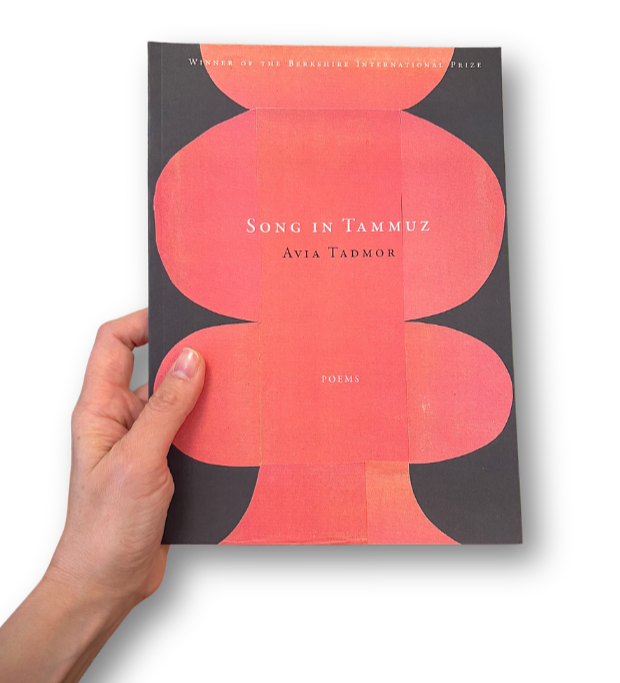
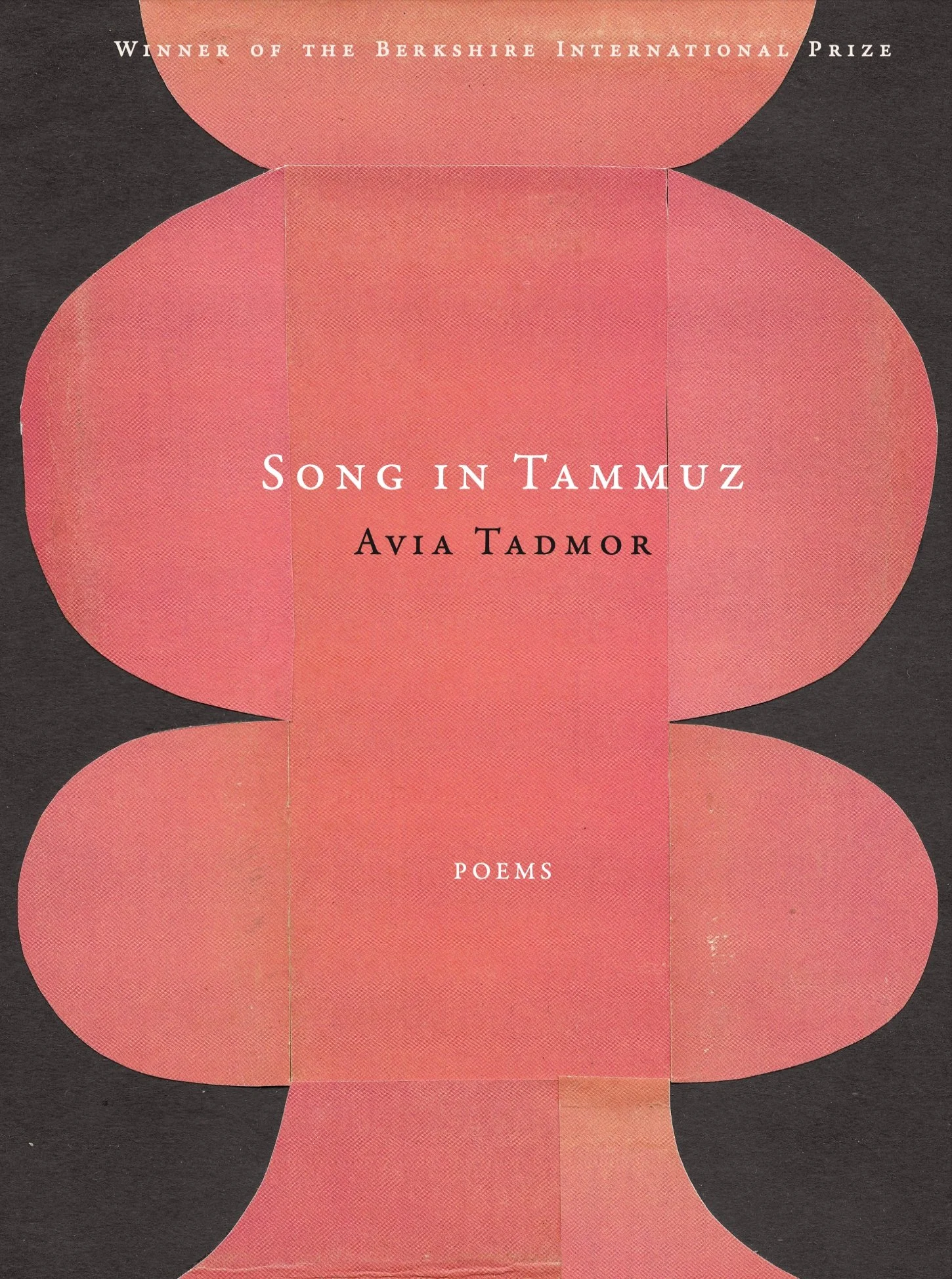
Song in Tammuz
“In conversation with the Biblical book of Ruth, Avia Tadmor crafts a brilliant exploration of displacement, migration, and loss.”
—Ellen Bass
Braiding together memory, archive, story and history, Song in Tammuz offers a contemporary investigation of desire, displacement, and longing.
These poems span centuries and continents while traversing linguistic forms— footnotes, dictionary definitions, the lyrical, the elegiac, and the ekphrastic bring old and new together as their speakers seek new definitions of self and of home.
Book details:
Published by Tupelo Press • October 1, 2026 • Winner of the 2024 International Berkshire Prize • Distributed by the University of Chicago Press • 94 pages
ISBN: 9781961209695
2024 International Berkshire Prize Winner, Judge’s Citation:
“Avia Tadmor’s stunning debut collection, Song in Tammuz, draws from an incredible range of literary forms, from familiar couplets and tercets to footnotes, dictionary definitions, and luminous lyric fragments.
While stylistically daring, even virtuosic, Tadmor’s work is unified by its enduring engagement with questions of language and alterity: What does it mean to be othered by and through language? What happens when grammar, syntax, and the concepts of identity housed within them are at odds? Does a revolutionary message demand new forms of discourse? ‘I can say it through the distance of this other tongue,’ Tadmor writes.
Indeed, she considers the role of language—from conceptual framework to vast storehouse of history, culture, and inheritance—in shaping the self, ultimately revealing our agency within a grammar and syntax we did not choose. As Tadmor herself writes, ‘Her pen is a stronghold, a lighthouse / flickering late in July.’
This is a book you will not soon forget.”
—Editors of Tupelo Press
What others have said:
Order your copy today.